What is DMCA? A Complete Guide for Content Creators (2026)
If you're a content creator on OnlyFans, Fansly, or any subscription platform, you've probably heard the term "DMCA" thrown around. Maybe someone told you to "file a DMCA" when your content got leaked. Maybe you've seen it mentioned on Reddit or Twitter.
But what does DMCA actually mean, and how does it help you protect your content? This guide breaks it down in plain language.
DMCA: The Basics
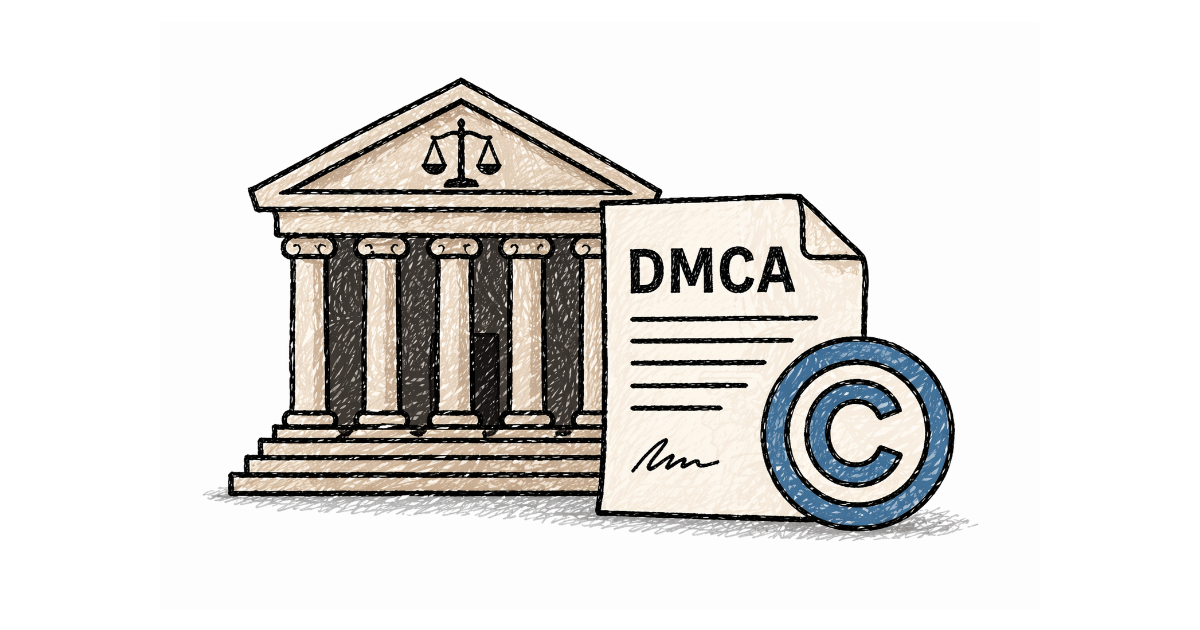
DMCA stands for the Digital Millennium Copyright Act. It is a United States copyright law that was signed in 1998. Its purpose is to protect copyrighted content on the internet, including photos, videos, and any other content you create.
The law is long and covers a lot of ground, but for content creators, the most important part is Section 512, also known as the safe harbor provision. This is the section that makes takedown notices possible.
How Section 512 Works
Section 512 created a deal between copyright owners and websites.
The deal works like this: websites that host user-generated content (like forums, social media platforms, and file hosting sites) are protected from being sued for copyright infringement, as long as they remove infringing content when they are notified about it.
This notification is called a DMCA takedown notice.
Without Section 512, every website that hosts user content would be at risk of being sued every time someone uploaded something they didn't own. The safe harbor provision solved this by creating a clear process: notify the site, they take it down, and they stay protected.
What is a DMCA Takedown Notice?
A DMCA takedown notice is a formal legal request sent to a website or platform. It tells them three things:
- You are the copyright owner of the content.
- Your content is being shared on their site without your permission.
- You want it removed.
For the notice to be legally valid, it must include:
- A description of the copyrighted work (your content).
- The specific URL where the infringing content is located.
- Your contact information.
- A statement that you have a good faith belief the use is not authorized by you.
- A statement that the information in the notice is accurate, under penalty of perjury.
- Your physical or electronic signature.
Once a website receives a valid DMCA takedown notice, they are legally required to act on it. If they do not, they lose their safe harbor protection and can be held directly liable for the copyright infringement.
What Happens After You File a Takedown?
After you send a takedown notice, the website should remove the content "expeditiously." The law does not specify an exact timeframe, but most compliant sites act within a few days.
The person who uploaded your content can respond with a counter-notice. A counter-notice is their way of saying "I believe I have the right to use this content." If they file a counter-notice, the website can restore the content after 10 to 14 business days, unless you file a lawsuit within that window.
In practice, counter-notices are rare for leaked creator content. Most people who upload stolen content do not want to identify themselves in a legal document.
Does DMCA Only Apply to US Websites?
DMCA is a US law, so it technically only applies to websites operating under US jurisdiction. However, because so many major platforms and hosting providers are US-based, DMCA has become the global standard for content takedowns.
For websites hosted outside the US, similar laws exist in other countries:
- European Union: The Copyright Directive (Article 17) requires platforms to prevent unauthorized content from being uploaded.
- United Kingdom: The Copyright, Designs and Patents Act provides similar takedown mechanisms.
- Canada: The Copyright Modernization Act includes a notice-and-notice system.
- Australia: The Copyright Act includes safe harbor provisions similar to the US.
The principles are similar across all of these: notify the platform, they remove the content, or they face liability.
Do You Need to Register Your Copyright?
No. Under US law, you own the copyright to any original work the moment you create it. If you took the photo or recorded the video, you are the copyright owner. You do not need to register it with the Copyright Office, and you do not need a copyright notice on your content.
That said, registering your copyright does give you additional legal benefits if you ever need to go to court, including the ability to claim statutory damages. But for the purpose of filing DMCA takedown notices, creation alone is enough.
When DMCA Notices Get Ignored
DMCA works well for legitimate platforms like Google, Instagram, YouTube, and most major websites. They have clear processes for handling takedown notices, and they comply because they want to maintain their safe harbor protection.
Piracy sites are different. Many of them:
- Operate in countries with weak copyright enforcement.
- Use privacy services to hide their ownership.
- Simply ignore takedown notices because they know most creators will not take legal action.
When a site ignores your DMCA notice, you have options beyond the notice itself:
- Contact their hosting provider. Every website has a hosting provider, and most hosting providers have their own terms of service that prohibit copyright infringement. If the site will not remove your content, their hosting provider often will.
- Contact their domain registrar. The company that registered the domain name also has terms of service. Reporting the infringement to them can result in the domain being suspended.
- Contact their ad network. Many piracy sites rely on advertising revenue. Reporting them to their ad network can cut off their income.
- Report to Google. Even if the source site will not remove your content, Google will delist it from search results, making it much harder for people to find.
This process of going beyond the initial DMCA notice is called escalation, and it is often the only way to get content removed from non-compliant sites.
How to File a DMCA Takedown on Google
Google has a specific process for DMCA requests. You can submit a takedown request through their legal removal request form.
You will need to provide:
- Your contact information.
- The URLs of the infringing content in Google's search results.
- A description of your original content.
- The required legal statements.
Google typically processes these requests within a few days. Once approved, the URLs will be removed from Google Search and Google Images.
For a detailed walkthrough, check out our guide: How To Remove OnlyFans Leaks in 2026.
DMCA for OnlyFans and Fansly Creators
As a creator on a subscription platform, everything you post is your copyrighted content. Your photos, your videos, your messages, all of it. When someone screenshots, downloads, or shares that content without your permission, they are committing copyright infringement.
You have every legal right to file DMCA takedown notices against any website sharing your content without authorization. This applies to piracy sites, forums, file hosting services, social media accounts, Telegram channels, and anywhere else your content appears.
The challenge is scale. If your content is on dozens or hundreds of sites, filing individual takedowns and following up on each one becomes a full-time job.
Key Takeaways
- DMCA is a US copyright law that gives you the right to request removal of your stolen content from websites.
- A DMCA takedown notice is a formal request that legally requires websites to remove your content.
- You own the copyright to your content automatically. No registration needed.
- When sites ignore your notice, you can escalate to their hosting provider, registrar, and ad network.
- Google has a specific form for removing infringing content from search results.
- Similar laws exist internationally, so your content is protected regardless of where a site is hosted.
Want to know where your content is being shared right now? Get your free leak scan. It takes 30 seconds and is completely confidential.
Michel Agora is the founder of Agora DMCA and a specialist in digital rights enforcement. He works directly with content creators to find and remove leaked content across piracy sites, search engines, Telegram, and Discord. He advocates for creator privacy, security, and digital rights. His approach is practical and technology-driven, not theoretical.